
Join me for some bookish events!
April 16 at noon: Join me at the Jewish Federation of Toledo for a talk and book signing.
Stay tuned for more upcoming events to be announced soon!

Join me for some bookish events!
April 16 at noon: Join me at the Jewish Federation of Toledo for a talk and book signing.
Stay tuned for more upcoming events to be announced soon!
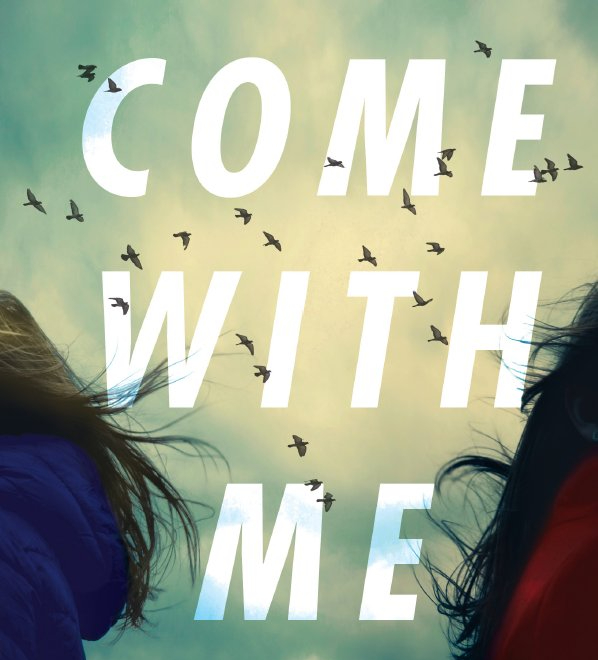
Thanks to NetGalley and Thomas & Mercer for an early copy of this book.
COME WITH ME opens with two young women, Gwen and Nicola, who are in their final year of college and meet as interns. We find Gwen daydreaming about her wedding as the more intense Nicola lists out her rules for career success. Upon graduation, the two lose touch once Gwen leaves the company to get married, but ten years later when Gwen’s husband dies and leaves her drowning in debt, she finds herself back in the job market. With no work history, Gwen is desperate for a reference and calls up Nicola, who is all too ready to help. Although they weren’t close during their internship, the posh and charismatic Nicola happens to be in search of a new best friend since her last one vanished (hmm, red flag?). Before long, the two are nearly inseparable, and Gwen begins to wonder if that’s a good thing. However, she’s let Nicola so far into her life and feels so indebted to her that she finds herself reluctant to take a stand. Have you ever had a frenemy you didn’t know quite how to deal with? Let’s just say that you’ll relate to this story!
Reader Takeaway: A few chapters in, I had a hard time putting this book down. Flanagan portrays Gwen as having enough concerns about Nicola that I couldn’t help but feel suspicious, yet I could also totally relate to Gwen’s doubts about her own perceptions. Was she misinterpreting a look or a comment? Being too sensitive? Flanagan does a great job of portraying Gwen as someone who is smart and determined but struggling with confidence as she recovers from a huge life change. I would highly recommend this book to anyone who enjoys a good character-driven psychological thriller.
Writer Takeaway: Flanagan is a master of character development! As in her other novels, she puts the reader inside her characters’ heads with skillful internals and the perfect amount of backstory. This novel is also a great example of how to effectively intersperse flashbacks that round out characters while still moving the plot forward. The short flashback chapters throughout the book give us insight into the protagonist and antagonist and build up to a powerful twist near the end. (I can reveal no more; get the book!)

When it comes to book clubs. I’m kind of the way Fight Club’s Marla Singer is about support groups. I can’t pass one up. One of my favorite groups, called Wine and Words, is put on by Gathering Volumes, the Toledo area’s only independent bookstore. This month’s Wine and Words read was The End of the Road by Andrew Welsh-Huggins, a gripping crime novel set in Columbus, Ohio.

The novel offers three intriguing point-of-view characters, but the real driver of the action is Penny, a woman whose partner—after just one day out of prison—is shot by the crime boss he testified against. As the story unfolds, it becomes clear that the only way to stop the merciless crime boss is for Penny to go after him herself. During the course of her quest, Penny meets rural sheriff’s deputy J.P. (another wonderful POV character), who joins her on her journey toward a final showdown.
Reader Takeaway
There’s a lot to enjoy in this novel, but the propulsive forward momentum was what stood out to me. Fair warning: you might want to clear your schedule, because once you start reading The End of the Road, it’s hard to put down. Part of this is due to Penny, a tenacious yet vulnerable protagonist determined to find justice in an unjust situation.
Writer Takeaway
Another reason this book is so gripping is that Welsh-Huggins gives Penny a crystal-clear motivation for seeking vigilante justice, along with a rapidly ticking clock. In crime fiction, “the ticking clock” is a plot mechanism that compels the protagonist to reach their goal by a certain time or else risk losing everything. Anyone looking for a good example of this technique should pick up this book. Welsh-Huggins masterfully sets the clock in motion that propels Penny on her frenetic overnight journey through Columbus and rural Ohio.
Bonus: For fans of crime novels and sports, Welsh-Huggins is also the author of seven books in the highly entertaining Andy Hayes series, which features a former Ohio State football player turned private eye.
Avid readers know that the only thing better than discovering a book you love is finding an entire series. Luckily for me, I’ve recently discovered the Kate Hamilton series of mysteries by Connie Berry.

The series follows Kate, a level-headed and smart forty-something with a dry sense of humor. Although Kate lives in Ohio where she has her own antiques store, family affairs take her to the British Isles where all of the books are set. Along with her love interest, who happens to be a British Detective Inspector, Kate gets entangled in murder investigations everywhere from the Scottish Highlands to quaint English villages.
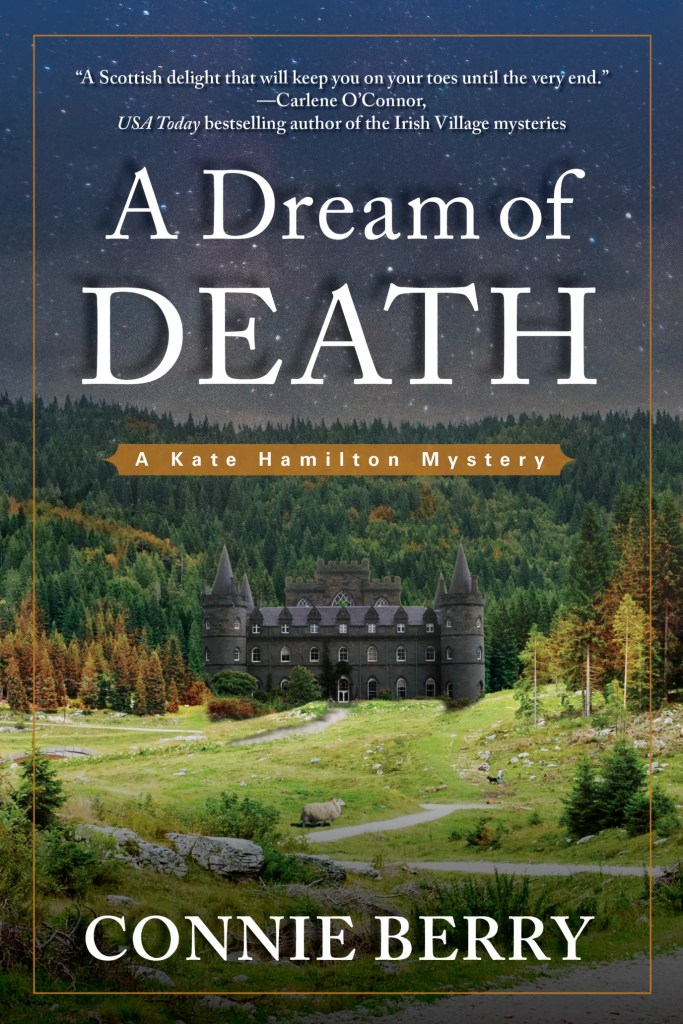


With its humor and British charm, I think this series will appeal to a wide range of mystery lovers, from those who enjoy the antiquities and wit of Gigi Pandian’s Jaya Jones series to fans of atmospheric British mysteries, like those by Ann Cleeves and Elizabeth George.
Here’s a list of Connie Berry’s Kate Hamilton books in order so that you can find out for yourself if this series is for you. Happy reading!

Bonus Book! Upcoming Novella
Mistletoe and Murder, a novella, which Berry refers to as book 4 ½ in the Kate Hamilton series, will come out in October of 2023.
Check out the author’s website for more information on Connie Berry and her books.

The Bangalore Detectives Club by Harini Nagendra has received about every recognition a debut mystery can get, and after reading it, I see why. The story, set in 1921, follows mathematics scholar Kaveri as she settles in the Indian city of Bangalore with her new husband Ramu. In an early chapter called Swimming in a Sari, we see how Kaveri’s adventurous nature pushes up against the conventional expectations of upper-class women in 1920s India. Later on, when Kaveri attends a dinner for her husband’s hospital and witnesses the lead-up to a murder, she can’t help but lend her empathy and intelligence to the investigation–particularly after someone she knows is blamed for the crime.
From the vibrant descriptions of India’s lush landscape and rich history, to the mouth-watering descriptions of food, reading this book was like visiting a time and place I would never get to be a part of otherwise. Another pleasure of this book is the supporting cast, such as Kaveri’s older neighbor, Uma Aunty, who accompanies her in her amateur sleuthing. I’m already looking forward to spending more time with these likable characters in the sequel, Murder Under a Red Moon. As an aside, I listened to this book and especially enjoyed Soneela Nankani’s narration, so I would recommend that format for anyone who likes audiobooks.
Although this book offers all the traditional charms of a cozy mystery, it does not glass over social issues of the time, such as the caste system, restrictions on women, and British colonization. Nagendra gives a great example of how to use social issues as key elements to drive a story without letting the issues overtake the narrative. The story works so well because she doesn’t just tell us about the issues; she shows their impact on characters in ways that drive the plot forward.
This book is a testament to the power of sensory details, even in a fast-paced mystery. The rich world that Nagendra creates drew me in just as much as wanting to know whodunnit.

Erin Flanagan set her Edgar-winning debut mystery DEER SEASON in the 1980’s in Gunthrum, Nebraska. The story follows the disappearance of teenager Peggy Ahren, but much of the story centers on Alma Costagan and intellectually disabled farmhand, Hal Bullard, who has become like a son to her over the years. When Hal becomes an easy target for suspicion, Alma and Milo (Peggy’s brother) are among the few people left still searching for answers.
Reader Takeaway: As someone who grew up in the rural Midwest, I loved the setting of this novel. It felt true to my experiences growing up in a similar place and time–from the network of small-town gossip to basement rec rooms and what it takes to keep a farm running. What I most appreciated was that it portrayed rural Midwesterners not as caricatures but as intelligent, complex individuals; in fact, what set the novel apart for me were the poignant insights into each character, particularly Alma and Milo. Flanagan shows us how Alma’s life has not turned out as she expected and how disappointments have begun to turn her bitter. This is a quiet, slow burn of a mystery that takes its time to fully build a world and make you care about the characters.
Writer Takeaway: I set my debut mystery HIDDEN ROOMS in rural Ohio, and although I hadn’t read DEER SEASON when I drafted it, so much of what Flanagan achieved in her this novel is exactly what I hoped to capture myself. Flanagan demonstrated how to set a riveting mystery in a “flyover” farm town by capturing the complex layers of tension between those who have lived in a place their whole lives, those who are new to town, and those who want to leave one day. I recommend this (and Flanagan’s other work) for any writer who wants to capture the overlooked depths and nuances of an under-represented place.

THE FINALIST by Joan Long follows a group of crime writers who travel to a secluded tropical island to complete a famous novelist’s final unfinished manuscript. The main character, Risa, is a single mom who has suffered her own recent tragedies over the past year. After less than twenty-four hours on the island, one of the authors is dead and the writers realize that they might have a real-life mystery on their hands.
Reader Takeaway: I found a lot to like about this novel, from the premise and plot to the setting and characters. I loved how the small cast of characters and the remote setting give the novel the feel of a classic locked room mystery but in a completely different type of environment. Risa comes across as a capable, sympathetic protagonist, and there are lots of good twists and red herrings that kept me guessing throughout the book. I can see why the book received an Agatha Award nomination for Best First Mystery.
Writer Takeaway: I learned a lot from the ways in which Long gradually layered in Risa’s backstory throughout the novel. Early breadcrumbs hinted at a significant past event but kept readers in suspense. This gradual reveal helped establish the novel’s pace while still giving enough details to develop a main character whose backstory drives her actions and decisions.
I enjoyed Marcy McCreary’s first Susan Ford mystery, The Disappearance of Trudy Solomon, and was excited to read the second book in the series, The Murder of Madison Garcia. I was happy to see that this book features another collaboration between Detective Ford and her father, a retired police officer. This time around, the pair investigate the death of Madison Garcia, who happens to be the daughter of a family friend and who placed a call to Detective Ford on the night of her murder. One of the many joys of this book is the depiction of Detective Ford’s relationship with her parents. McCreary lovingly captures the mix of affection, squabbles, and humor between Ford and her aging parents. Themes of family and friendship were also woven throughout this mystery and raised interesting questions about the people we trust (or simply tolerate) and why. As in the first book, McCreary nails the investigatory details that make for an engrossing police procedural.
Reader Takeaway: The Murder of Madison Garcia is another engrossing, page-turning mystery from McCreary. This book kept me guessing up to the very end with an interesting ensemble of suspects, all of whom have their secrets. I suspected just about every character at one point or another! Of course, I stayed up way too late finishing this book, and now I’m already looking forward to the next one.
Writer Takeaway: I’m currently outlining my second book in a series, so I was especially struck by how skillfully McCreary carried over characters and events from her first novel into her second. I’m sure we have all encountered a series where each book has an info dump to catch readers up on what they may have missed. Those who have followed the series over time might just skim over this type of ‘housekeeping’ summary. McCreary shows authors how to avoid this and, instead, capitalize on the complexity of recurring characters. Nothing felt repetitive in McCreary’s second book—instead, McCreary built on the foundations from her first novel while including just the right amount of information for new readers. The Murder of Madison Garcia offers a great example for those of us who might want to write a series by showing how recurring characters and places can grow cumulatively richer with each book.
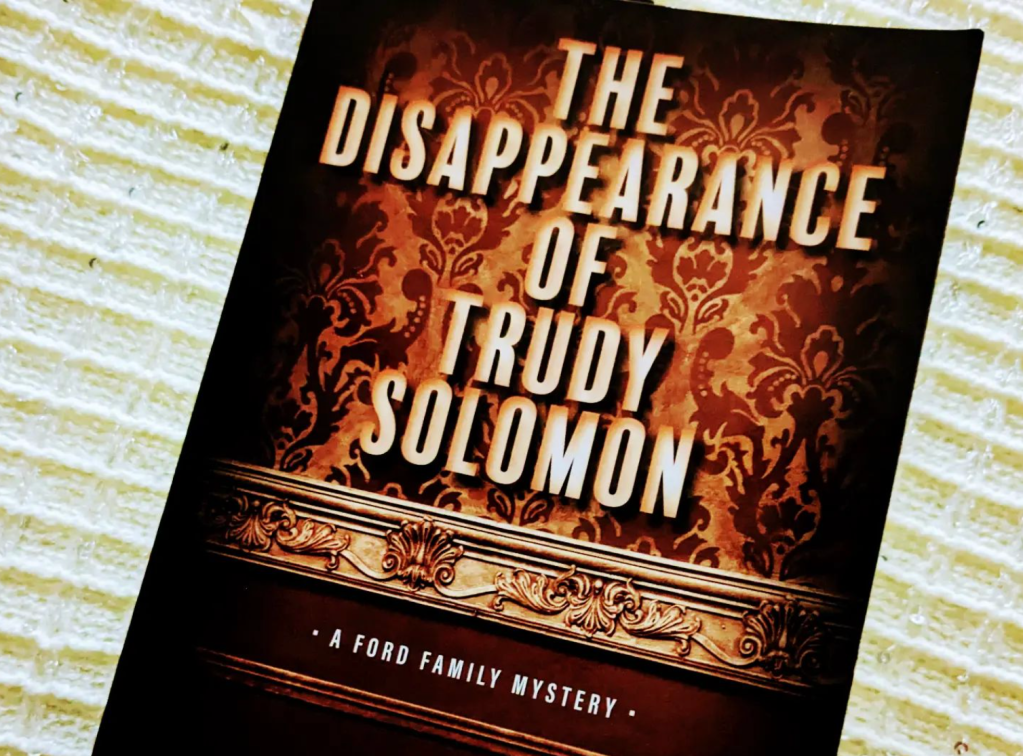
I met this author, Marcy McCreary, at a writer’s conference, and the moment she told me the plot of her novel, The Disappearance of Trudy Solomon, I was hooked: Trudy Solomon, who disappeared without a trace in 1978, turns up in a memory care facility decades later. But suffering from early onset dementia, she can’t explain where she’s been all these years. Searching for answers, Detective Susan Ford teams up with her father, a retired police officer who investigated the original case and has long been haunted by the lack of answers.
The book is set in a former resort town in the Catskills, and all of the characters are connected to the once-glamorous Cuttman Hotel, where Trudy Solomon worked at the time of her disappearance. The mystery explores multiple cold cases (I don’t want to spoil too much), so you end up with numerous mysteries to solve for the price of one.
Among my favorite aspects of the book was the father-daughter sleuthing duo. Not only have I never seen a pairing like this before, but McCreary captures a relationship that is humorous and sweet without sentimentality. A subplot also explores Ford’s experiences with an officer-involved shooting and the subsequent investigation and community fallout. McCreary explores the different angles of this incident with nuance and empathy. Overall, I loved the voice, the plot, the setting, and the pacing of this mystery, so I would highly recommend it!
Reader Takeaway: I loved the exploration of the father-daughter relationship–from Susan and her father’s shared scars from the original disappearance, to their catharsis in working through the cold case. I’m glad to see there’s another Ford Family Mystery on the way.
Writer Takeaway: Dialogue and voice! McCreary shows how to write punchy, clever dialogue that moves the plot forward and brings her characters to life. It’s a great lesson in “show don’t tell” when it comes to characterization.

The Black Hour by Lori Rader-Day won the Anthony Award for Best First Novel. That should have given me some idea of what to expect, but still, after reading the first few pages, I was blown away by Rader-Day’s dark humor and vivid description. The book follows Amelia Emmet as she returns to teaching at the prestigious Rothbert University after being shot by a student she didn’t know. She’s struggling through her first day back to work when she meets her new graduate assistant, Nathaniel (later dubbed “Nate”), a young man whose help she can use, but who seems almost a little too interested in her. Before long, Amelia and Nate, both researchers in the sociology of violence, begin working together to learn more about the student who shot her and why he targeted her of all people.
Beyond succeeding as an engrossing mystery, The Black Hour delves into the shifting identities of its central characters–Amelia as she adjusts to her new reality of chronic pain and disability and Nate as he leaves his blue-collar small town for grad school at an elite Chicago university. The characters take turns narrating and we learn that both have struggled with depression and finding a sense of belonging among their privileged peers after growing up poor in the rural Midwest. Rader-Day also vividly depicts the pain that is part of Amelia’s existence now and how the cane that she uses to slowly make her way around campus impacts her sense of self. While she had been a rising star in the department before the shooting, now she sees herself as a different person, disfigured and washed-up. As someone who had my life upended by a chronic illness, this crisis of confidence resonated with me. This book captures how a physical ailment not only affects the little choices most people take for granted (like what chair to sit in or where to park), but also their sense of who they are and their confidence in their altered capabilities. As Amelia puts it on page one: “This is how it would be. Every task more difficult than before. Every step a public performance.”
Takeaway as a reader: So, yeah, if I haven’t made it clear already, I recommend this book–particularly for readers who are looking for a mystery where the characters are even more compelling than the crime.
Takeaway as a writer: Lori Rader-Day knows when and how to start a book. To begin with, the main character, Amelia, arrives on page one having already been shot a year ago for reasons unknown–and that’s not even the focus. What draws us in is how simultaneously fierce and vulnerable as hell she is as she painfully and self-consciously makes her return to work, all the while mouthing off to the photographer who’s trying to capture the big moment for the student paper. By the bottom of page two, we know enough about Amelia and her situation–as well as Rader-Day’s voice as a writer–that there’s no way we’re putting this book down.
 Kate Michaelson
You must be logged in to post a comment.